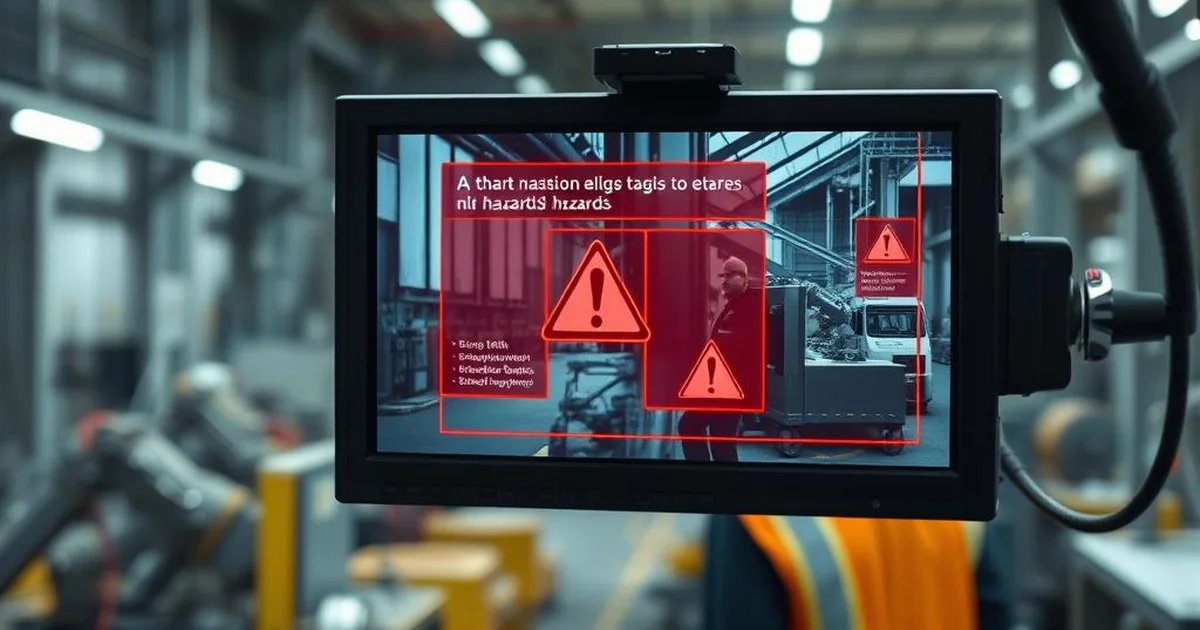
AI video analytics construction hazards systems use on-site cameras and computer vision models to detect unsafe conditions—missing PPE, fall risks, vehicle proximity, heat-stress posture—in real time, before a near-miss becomes an incident. For Saudi giga-projects, where site sizes stretch across square kilometers and shifts run 24/7 through 50°C summers, this isn't a nice-to-have; it's the only way to extend HSE teams from reactive patrol to proactive coverage. Below are the ten hazards the technology consistently catches earlier than human supervision alone.
Why traditional HSE monitoring breaks down on Saudi giga-projects
Saudi Arabia is running one of the largest concurrent construction pipelines in history. NEOM alone spans 26,500 km² with a $500B target budget. Qiddiya's first phase sits at roughly $8B, scaling past $36B. Add Diriyah, AMAALA, the Red Sea Global phase two, Roshn's multi-hundred-thousand home pipeline, and the broader Saudi Vision 2030 giga-project portfolio, and you get tens of thousands of workers on any given shift, on sites that don't fit a single human eye.
The traditional model—HSE officers walking the site, paper permits, post-incident investigations—scales linearly with headcount. It doesn't scale with square kilometers of active work face. Heat, dust storms, and shift fatigue further degrade what a patrol can catch. That's the gap AI video analytics construction safety platforms fill: persistent, tireless, second-by-second observation with model-driven pattern recognition.
A few numbers worth knowing before you scope a deployment:
- Falls from height cause roughly 33% of US construction fatalities (OSHA), with MENA trends tracking similarly.
- Struck-by incidents add another 10–15% of fatalities.
- Heat stress cases in Saudi construction rise 30–40% in July–August versus shoulder months, per Ministry of Health advisories.
- Vision 2030 giga-projects require >70% local content and verifiable compliance with the Saudi Building Code, both of which need auditable safety records.
The 10 construction hazards AI video analytics catches early
1. Missing or improper PPE
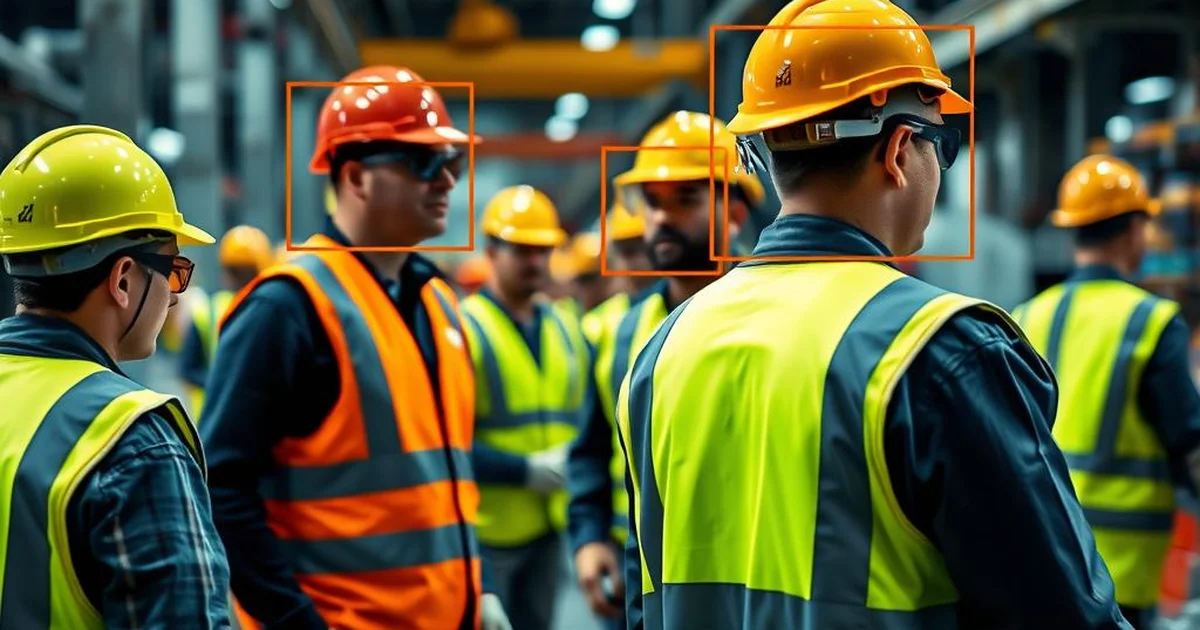
Hard hats, high-visibility vests, safety harnesses, gloves, safety glasses. AI PPE detection Saudi Arabia deployments flag missing items within 1–3 seconds of a worker entering a monitored zone. This is the highest-confidence detection class—modern models run above 95% precision on hard-hat and vest detection in good lighting, and 85–90% in dust or low-light.
The real win is consistency. Baseline compliance without monitoring typically sits at 60–75% on a typical site; published case studies show that climbs to 92–97% within 60–90 days of continuous AI feedback tied to supervisor alerts.
2. Falls from height and unprotected edges
Open edges on slabs, mezzanines, and formwork are the single deadliest hazard category. AI construction hazard detection systems identify workers approaching an unprotected edge, or an edge that has lost its guardrail, and trigger an alert before the worker crosses the danger zone. Edge-line crossing, harness-not-attached near a fall hazard, and missing toe boards are all detectable with edge-aware camera positioning.
The economic case is direct: a single fall fatality carries direct and indirect costs well above SAR 1.5M (per ILO and Saudi MoL averages), and project stop-work orders can burn SAR 200K–500K per day.
3. Struck-by vehicles and equipment
Telehandlers, dump trucks, concrete pumps, forklifts. On a busy site, the line of sight between operator and ground worker disappears constantly. AI video analytics construction hazards systems use proximity-zone logic (worker inside equipment swing radius), plus pedestrian detection in vehicle paths, to fire alerts 2–5 seconds before a near-miss would occur.
Strobe-light + audio alerts at the equipment are the usual intervention pattern. Sites that pair AI proximity detection with ISO 5006 visibility standards typically cut pedestrian-equipment near-misses by 50–70% within six months.
4. Heavy equipment blind spots and tip-over risk
Excavators, cranes, and MEWPs have inherent blind spots that even spotters can't fully cover. AI models add virtual 270°–360° zones around each machine, warning operators of personnel in crush zones. For tip-over, accelerometer-fused analytics flag off-level operation before the machine commits to an unsafe lift.
5. Confined space violations
Entry without permit, atmosphere out of spec, worker alone inside. AI video analytics giga-projects setups integrate with gas-detection telemetry and time-in-space rules. The model can flag "three workers inside, one outside" or "no attendant for 90 seconds," triggering automatic PA announcements and supervisor pings.
6. Heat stress indicators in summer conditions
This is the Saudi-specific one. With summer ambient temperatures of 44–50°C and humidity along the Eastern Province coast, heat illness is a daily risk. Real-time construction hazard detection models now include posture and gait analysis—sway, slow movement, sudden crouch—that flag probable heat-stress onset 30–90 seconds before the worker collapses. Pair that with wearable skin-temperature data and the system can pull a worker to a cool-down tent automatically.
7. Dust storms and air quality events
Regional shamal winds can drop visibility to under 100 meters in minutes. AI video analytics with particulate sensors can recognize the visual signature of an incoming dust wall and trigger site-wide work stoppages for crane lifts, tower work, and hot work. Optical flow + particulate counting gives the right intervention, automatically.
8. Unauthorized access to active zones
Curious workers entering an energized electrical room, an open excavation, a blast zone, a lift-swing area. Geofence-based detection inside the analytics layer flags every breach, with face-blur options to stay aligned with Saudi PDPL (Personal Data Protection Law) requirements that took full effect in September 2024.
9. Crane and lifting operations
Tag-line workers in crush zones, suspended loads over people, two cranes crossing swing radii. AI safety monitoring NEOM and other giga-project deployments overlay lift plans on live video so the system can detect a planned pick zone being entered by an unauthorized worker in real time.
10. Slip, trip, and housekeeping failures
Spilled fluids, loose cable, scrap piles blocking egress. Often the lowest-tech detection class but the highest-frequency incident. Object-on-ground detection, water-spill recognition, and egress-pathway monitoring combine to fire housekeeping tickets automatically.
Hazard comparison at a glance
| # | Hazard | Severity if realized | Typical baseline frequency | AI detection confidence | Avg. alert lead time |
|---|---|---|---|---|---|
| 1 | Missing PPE | Medium (injury amplifier) | High – 25–40% of shifts | 95%+ day / 85%+ dusty | 1–3 sec |
| 2 | Fall from height | Very high (often fatal) | Medium – 1–3 events/month per site | 90–95% | 2–5 sec |
| 3 | Struck-by vehicle | Very high | Medium – 2–5 events/month per site | 88–93% | 2–5 sec |
| 4 | Equipment blind spot | High | High – 5–10 events/month per site | 90%+ | 2–4 sec |
| 5 | Confined space | High (often fatal) | Low – 1–2 events/quarter per site | 92%+ | 3–8 sec |
| 6 | Heat stress | Medium–high | High in summer | 80–88% | 30–90 sec |
| 7 | Dust / air quality | Variable | Seasonal | 85–90% | 1–3 min |
| 8 | Unauthorized access | Variable | Medium | 93%+ | 1–2 sec |
| 9 | Crane / lift ops | Very high | Low – 1–3 events/month per site | 88–92% | 3–6 sec |
| 10 | Slip / trip / housekeeping | Low–medium | Very high | 90%+ | 2–5 sec |
These are deployment-range averages, not guarantees. Model performance scales with camera quality, mounting height, lighting, and dust load.
What makes a Saudi deployment actually work
Buying software is the easy part. Getting the system to perform on a real site takes engineering. The non-negotiables:
- Camera coverage engineering. 8–12 MP cameras, IP66/IK10 rated, mounted 4–8 m high with proper overlap. Cheap cameras in dusty conditions are the #1 reason deployments fail.
- Edge + cloud split. On-device inference for sub-second alerts, cloud for cross-site dashboards and audit. Saudi sites often need on-prem edge for data sovereignty under PDPL.
- PDPL alignment. Face blur by default, retention windows of 30–90 days unless incident-linked, written DPIA before go-live. The SDAIA guidelines published in 2024 are the reference.
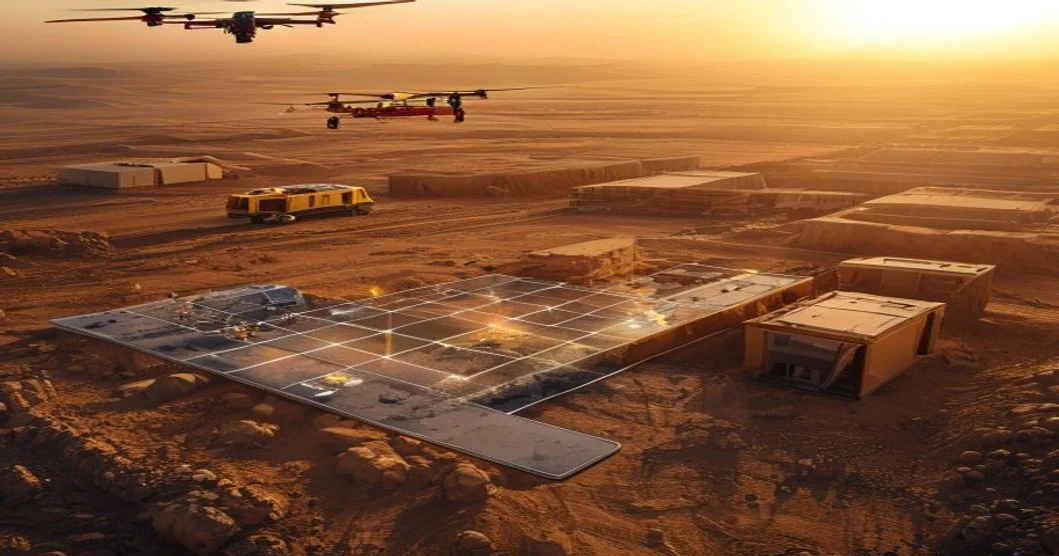
- GACA flight permits. For drone-based perimeter sweeps and progress capture, the General Authority of Civil Aviation requires registration, no-fly-zone checks around KAEC and military-adjacent sites, and pilot certification.
- Heat & dust hardening. Enclosures rated 60°C+, sealed optics, scheduled cleaning every 2–4 weeks in summer.
- Integration with existing HSE. The AI doesn't replace the officer; it multiplies them. The best results come from pairing analytics output with the existing safety observation card system, not running parallel to it.
- Local content & Vision 2030 reporting. Documented safety improvements feed directly into the local-content and ESG narratives project owners need for tender prequalification.
Frequently asked questions
How fast does AI video analytics actually alert on a hazard? Most platforms fire alerts within 1–5 seconds of the unsafe condition appearing in frame. PPE and zone-breach alerts sit at the fast end (1–3 seconds); behavioral hazards like heat stress run 30–90 seconds because they rely on posture change over a window, not a single frame.
Does it work at night or in dust storms? Yes, with caveats. Thermal or low-light cameras handle night shifts at 85–92% of daytime accuracy. Heavy dust is harder; models trained on Saudi summer data with particulate overlay perform best. Expect a 5–10% accuracy drop during a shamal and plan stop-work rules accordingly.
Is it compliant with Saudi PDPL? It can be, if you engineer for it. Face blur by default, written retention limits, no biometric identification of workers without explicit consent and a documented purpose. Most enterprise platforms shipping into Saudi Arabia in 2025 ship a PDPL-ready configuration out of the box.
How does the cost compare to adding an extra HSE officer? A 12-camera, edge-server, cloud-dashboard deployment typically runs 30–50% of an HSE officer's fully loaded annual cost. The harder ROI case isn't headcount; it's avoided stop-work days, fewer LTIs, and improved contractor prequalification scores on the next tender.
Can it integrate with our existing CCTV? Usually yes, if cameras are IP-based (ONVIF/RTSP), 1080p minimum, and have stable power and PoE. Mixing four different OEM camera brands in one deployment adds 10–15% integration cost but rarely blocks a project.
The bottom line
The ten hazards above are not theoretical. They are the same ten your site safety committee is already talking about in the morning toolbox talk. The difference with AI video analytics construction hazards coverage is that detection stops depending on who happened to be looking, and starts running every minute of every shift, across the whole site, at the same standard.
For Saudi giga-projects where scale, heat, dust, and shift rotation overwhelm the human patrol model, this is the path from reactive safety to engineered safety.
ViewKeeper delivers AI video analytics and drone surveying purpose-built for Saudi construction, HSE, and industrial inspection—deployed across NEOM, Qiddiya, and other Vision 2030 programs. If you want a 30-minute walkthrough of how the ten hazards above would be caught on your site, get in touch.