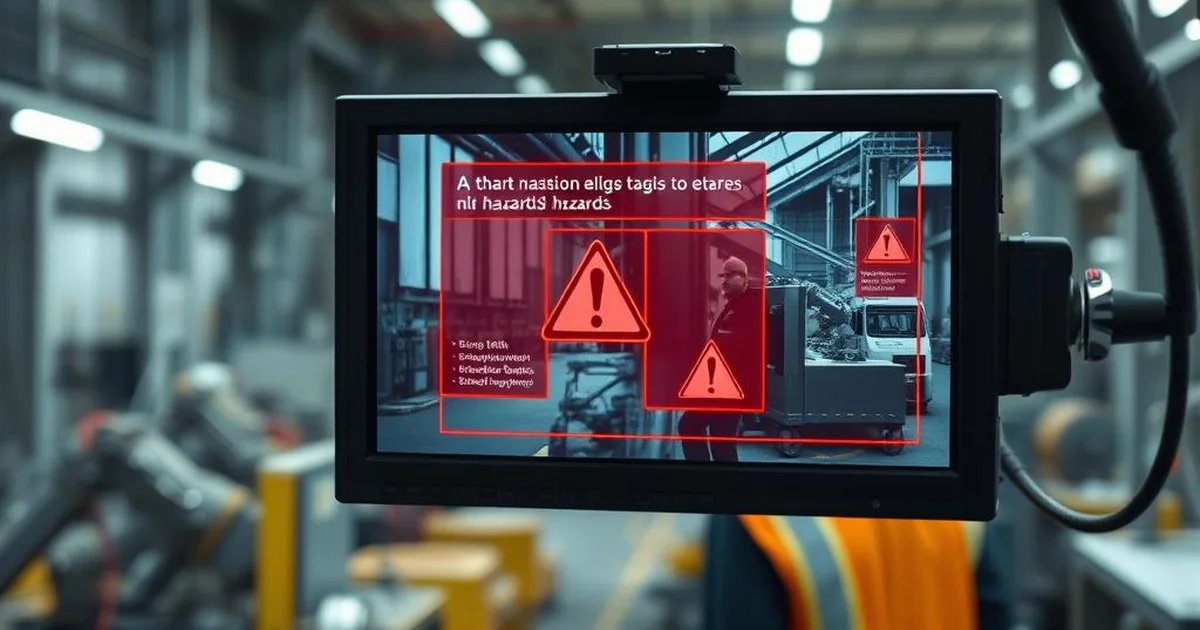
Quick answer: AI PPE detection is the fastest, most reliable way to enforce personal protective equipment compliance on Saudi giga-projects. Computer vision models scan live camera feeds and flag missing hard hats, harnesses, hi-vis vests, and respirators the moment a worker crosses into a controlled zone. For NEOM, Qiddiya, and Red Sea Global, this turns PPE compliance from a paper checklist into a real-time, audit-ready control.
Why PPE detection matters more on Saudi giga-projects
The math is unforgiving. Construction still accounts for roughly 20–25% of workplace fatalities in the Kingdom, and international OSHA-aligned research suggests a majority of construction injuries involve some PPE element — wrong gear, missing gear, or gear that was removed mid-task. On a giga-project with 30,000 workers moving across 50 active zones, a clipboard and a foreman's eyes cannot keep up.
PPE detection solves a specific problem: human observers see one worker at one second. A vision model sees every worker, every second, across hundreds of cameras. Repeat PPE violations typically drop 60–80% within the first 90 days of deployment, based on regional rollouts. Near-misses stop being reported three days late — they surface in under four seconds, with a time-stamped clip attached.
Saudi Arabia amplifies the problem in three ways. First, heat. With summer highs of 45–50°C on sites in Tabuk, Rabigh, and Riyadh, workers routinely remove hard hats and vests to "breathe." Models trained on local conditions learn to flag the moment a hat comes off, not minutes later. Second, dust. Shamal-driven storms knock goggles and respirators sideways within an hour of going on site. Third, the workforce mix. NEOM alone runs across 40+ nationalities and 12+ subcontractor tiers, which means inconsistent PPE training and inconsistent enforcement. Vision-based enforcement is the only control that behaves the same way for a Filipino scaffolder and a Spanish rigger.
7 PPE detection use cases that actually cut incidents
The phrase "PPE detection" gets used loosely. These are the seven use cases that consistently reduce recordable incidents on Saudi giga-projects, in the order most teams should deploy them.
1. Hard hat detection at site entry and live work zones
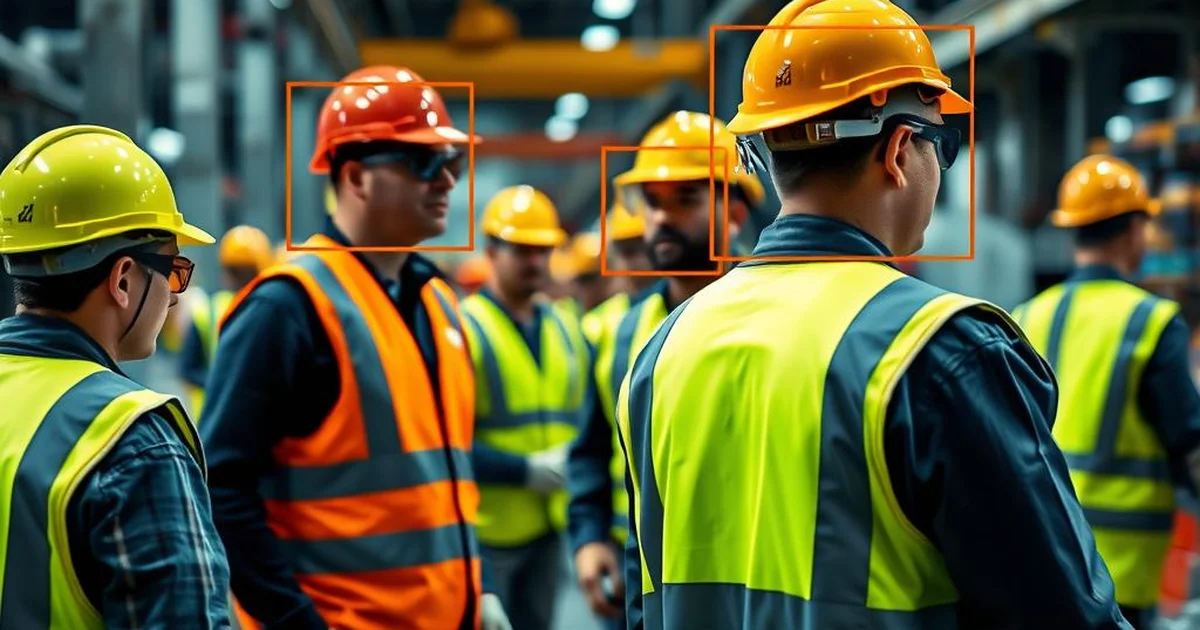
The single highest-volume violation on any Saudi site is no hard hat. A vision-based hard hat detection model wired to turnstiles, gate houses, and zone access points catches the violation before the worker enters the excavation, the rebar yard, or the tower base. Internal benchmarks on NEOM-line projects show that gate-level AI enforcement cuts unhelmeted entries by 70–85% within the first quarter.
The feedback loop matters. A 3-second on-screen alert at the gate lets a worker self-correct. A 30-second delay to the HSE manager means the worker is already in the zone. ViewKeeper's standard deployment pairs detection with a guard-screen alert, not a punishment, which is why adoption is high and grievance cases stay low.
2. Hi-vis vest enforcement in vehicle–pedestrian interface zones
Hit-by-vehicle is the leading cause of fatal injuries on Saudi giga-projects, especially along the logistics spine between camps, laydown areas, and active work. Hi-vis vest detection on dump-truck, telehandler, and haul routes gives operators a real-time "no vest, no go" signal at the route intersection.
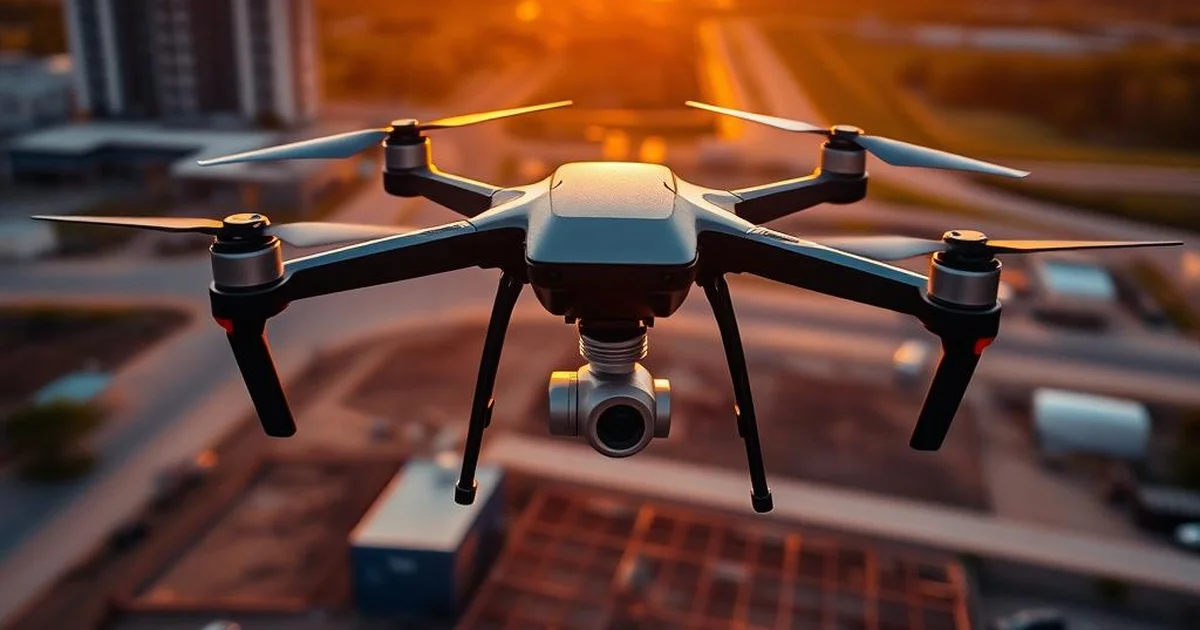
The trick is angle. A hi-vis detection model trained on overhead drone feeds (a ViewKeeper strength) detects 95%+ of vest compliance on haul roads, where fixed cameras get occluded by dust and parked equipment. The same model can be paired with license-plate recognition to flag subcontractor vehicles carrying un-vested passengers — a common and under-reported gap.
3. Working-at-height harness detection
Edge protection, scaffold inspections, and harness compliance are the three lines of defense at height. The first two are designed in. The third is human. On NEOM's The Line and Qiddiya's cliff-edge structures, working-at-height is a daily activity for thousands of workers. Harness detection on tower-crane platforms, mast climbers, and rebar-deck edges catches the worker who clipped on at ground level and unclipped to climb a brace.
The operational gain is subtle. Manual harness checks happen at the start of shift. AI harness detection happens continuously. "Unclipped for 30+ seconds" events typically fall 50–65% after deployment, which directly lowers the probability of a fall arrest — and the shoulder injury that follows.
4. Hot work and welding PPE enforcement
Welding, cutting, and grinding on Saudi sites run 11 months a year, with the same PPE demands: face shield, fire-resistant jacket, leather gloves, and either a respirator or PAPR depending on the substrate. Hot-work zones are also the most permissive on small violations, because foremen don't want to stop a tacker for 90 seconds over a glove.
PPE detection rebalances this. A model trained on hot-work-specific PPE (face shield + sleeves + gloves) flags the welder who strips down mid-pass and triggers a 30-second pause on the work permit. Saudi petrochemical and construction clients typically see a 40–55% reduction in hot-work PPE-related near-misses in the first six months.
5. Heat-stress and dust PPE monitoring
Saudi-specific and not optional. Between June and September, body temperature monitoring, hydration breaks, and respirator use during shamal-driven dust all fall under the same HSE umbrella. PPE detection here extends beyond a hard hat — it covers dust mask, neck shade, and cooling-vest use in known heat-stress zones.
A model tied to a WBGT feed becomes a compound control: above 32°C WBGT and missing a cooling vest, the worker gets directed to the cooling tent. The same applies when PM10 crosses 350 µg/m³ — a respirator becomes mandatory and the model enforces it. This is the use case where AI PPE compliance Saudi Arabia programs stand apart from Western deployments, where heat and dust are seasonal rather than constant.
6. Confined space entry verification
A confined space permit in Saudi Arabia requires a documented rescue plan, gas testing, and a watcher. It also requires specific PPE: harness, retrieval line, supplied air, and intrinsically safe lighting. Manual spot checks happen at the entry; AI verification happens at the entry and inside the space, via fixed and wearable cameras.
The model is trained to flag an unhooked retrieval line — a top-three cause of confined space fatalities globally. A typical deployment in a wastewater or utility tunnel shows a 60% drop in unhooked-line events in 90 days, and an audit trail that satisfies the Royal Commission and SASO inspectors.
7. Composite PPE checks tied to permit-to-work
The seventh use case is the one that ties everything together: composite checks. A lifting supervisor's permit requires hard hat + hi-vis + gloves + safety boots + (if at height) harness. A confined space permit adds retrieval line and supplied air. A hot work permit adds face shield and fire-resistant sleeves.
Composite PPE detection runs all checks in parallel, against the specific permit the worker is operating under, and refuses access to the work face if any element is missing. This is where the model stops being a camera gimmick and starts being a permit-to-work system that can see.
How AI PPE detection compares to manual spot checks
| Control method | Detection latency | Coverage of work hours | Audit trail | Repeat-violation rate after 90 days | Heat and dust robust |
|---|---|---|---|---|---|
| Foreman spot checks | Hours | 5–10% | Paper, often lost | Baseline (0%) | Low — foreman leaves zone |
| Daily safety walk-downs | 12–24 hours | <2% | Daily log | -10 to -20% | Low |
| Existing fixed CCTV (no AI) | Never (recorded only) | 100% of camera view | Video, reviewed post-incident | 0% | Medium |
| AI PPE detection (real-time) | 1–4 seconds | 100% of camera view, 24/7 | Time-stamped, exportable | -60 to -85% | High — designed for Saudi conditions |
The table captures why procurement keeps choosing vision. Manual methods catch 5–10% of violations. AI catches them all, in real time, with the receipt a regulator or client wants.
Implementing PPE detection under Saudi regulation
Three regulatory realities shape a Saudi deployment:
- PDPL (Personal Data Protection Law). PPE detection is biometric-adjacent when facial recognition is added. For pure PPE detection (no face ID), PDPL exposure is low but not zero — workers must be notified, and signage is required at every monitored zone. ViewKeeper ships PDPL-compliant signage packs and DPIA templates with every deployment.
- GACA and site-level drone permits. When PPE detection runs on drone feeds (overhead haul roads, laydown yards), commercial drone permits under GACA apply. A licensed operator, a flight plan, and geo-fenced corridors are non-negotiable. ViewKeeper's drone surveying team holds the GACA authorizations and handles the paperwork.
- Royal Commission and client HSE standards. NEOM, Red Sea Global, and Diriyah each publish their own HSE technical standards, which often exceed the Saudi building code. PPE detection rules have to be configurable to each client's matrix — Red Sea's color-coded zone system for environmental PPE is not the same as NEOM's. The detection model has to flex without re-training.
A practical rollout on a 5,000-worker site takes 6–8 weeks: 2 weeks of camera survey and integration, 3 weeks of model training on the site's PPE variants (hard hat color, vest color, logo, sleeve), 2 weeks of parallel running with manual checks, then go-live with a 30-day shadow period.
Frequently asked questions
What is PPE detection and how does it work on a construction site?
PPE detection is a computer vision application that identifies whether workers in a camera frame are wearing the required personal protective equipment — hard hats, hi-vis vests, harnesses, respirators, gloves, goggles, or safety boots. Cameras (fixed, PTZ, body-worn, or drone-mounted) stream video to a model running at 15–30 frames per second, draw a bounding box around each person, classify visible PPE, and send an alert to a guard, a gate, or a work-permit system when a required item is missing.
Is AI PPE detection accurate enough to be used as a primary control on a Saudi giga-project?
Yes, when the model is trained on local PPE variants. Off-the-shelf Western models often fail on Saudi sites because hard-hat colors, vest color codes, and sleeve patterns differ. A model trained on at least 5,000 labeled local frames typically reaches 92–97% accuracy on hard hats, 90–95% on hi-vis vests, and 85–93% on harnesses — well above the threshold for non-punitive enforcement. Accuracy on face shields and respirators is lower (80–88%) and is usually run as a secondary check.
Does PPE detection comply with Saudi Arabia's Personal Data Protection Law (PDPL)?
PPE detection without face recognition is generally low-risk under PDPL, but it is not zero risk. Operators must notify workers that monitoring is in place, post signage at zone entries, retain footage only as long as needed for the stated HSE purpose, and limit access to authorized personnel. If facial recognition is added for attendance or access control, full PDPL controls apply, including a data protection impact assessment. ViewKeeper's standard deployment is PPE-only, with face recognition as an opt-in module.
How long does it take to deploy AI PPE detection on an active giga-project site?
A typical 50–100 camera deployment on an active site takes 6–8 weeks end to end: 1–2 weeks for the camera survey and network integration, 2–3 weeks for model training on the site's specific PPE, 1–2 weeks of parallel running with the existing manual PPE checks, and a 1–2 week shadow period before the system becomes the primary control. Sites with existing IP cameras and a managed network can compress this to 4 weeks.
The bottom line
PPE detection is no longer a pilot. On Saudi giga-projects, it is the difference between a safety department that documents incidents and one that prevents them. The seven use cases above — gate-level hard hat checks, hi-vis enforcement on haul roads, harness detection at height, hot-work PPE, heat-stress and dust kits, confined space verification, and composite permit checks — are the ones that move TRIR and the audit trail your client or Royal Commission will ask for.
ViewKeeper designs, deploys, and operates AI PPE detection across Saudi Arabia, with PDPL-compliant signage, GACA-licensed drone feeds, and models trained on local PPE variants. If you are running a NEOM, Qiddiya, Red Sea, Diriyah, or AMAALA work package and want a 30-day site pilot, talk to our HSE engineering team.